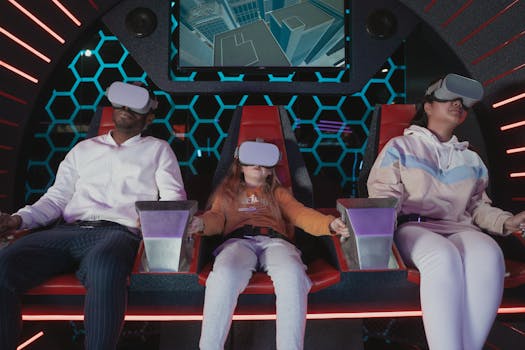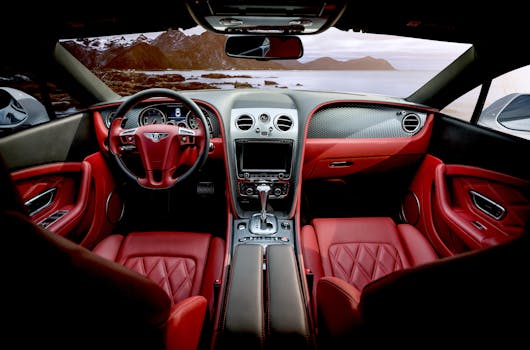
Remember when car dashboards were glorified abacuses, just counting miles and telling you if the oil light decided to throw a tantrum? Fast forward a few decades, and we’re staring down a future where our cars can project information, directions, and even virtual mechanics right onto the windshield. It’s not science fiction anymore; it’s the exciting realm of augmented reality in automotive, and frankly, it’s about to make your daily commute feel like a trip into the future.
Think about it. For years, we’ve been squinting at tiny GPS screens, trying to decipher which lane we actually need to be in, or fumbling with owner’s manuals that might as well be written in ancient hieroglyphics. Augmented reality (AR) is poised to change all that, layering useful digital information onto our real-world view, making driving smarter, safer, and, dare I say, a little bit cooler.
Navigating the Road Ahead: AR as Your Co-Pilot
Let’s be honest, the joy of driving can sometimes be overshadowed by the sheer complexity of modern navigation. Trying to follow a 2D map on a screen while simultaneously watching the road, traffic, and that rogue squirrel darting across the highway is a juggling act many of us would prefer to skip. This is where AR truly shines.
Intuitive Navigation: Imagine seeing directional arrows painted directly onto the road in front of you through your windshield or a heads-up display (HUD). No more looking down, no more guesswork. The AR system can highlight your exact lane, show upcoming turns with precision, and even warn you about hazards in real-time. It’s like having a personal, invisible guide right there with you.
Enhanced Safety Features: Beyond just directions, AR can supercharge existing safety systems. It can overlay information from blind-spot monitors, alert you to pedestrians or cyclists you might have missed, and even provide visual cues for adaptive cruise control, showing you precisely how far you are from the car ahead. It’s about reducing cognitive load, letting drivers focus on what truly matters: the road.
In my experience, the mental strain of constantly switching focus between the road and a screen is a significant contributor to driver fatigue. AR’s ability to integrate critical information seamlessly into the driver’s field of view is a game-changer for comfort and safety.
Under the Hood (Literally!): AR for Maintenance and Repair
The benefits of augmented reality in automotive aren’t confined to the driver’s seat. Mechanics and even everyday car owners stand to gain immensely from this technology, making vehicle maintenance less of a mystery and more of a straightforward task.
DIY Dreams: Empowering the Home Mechanic
Ever stared at a complex engine bay and felt like you needed a degree in mechanical engineering just to find the dipstick? AR can transform that daunting experience.
Step-by-Step Guidance: Imagine pointing your smartphone or tablet at your engine, and an AR overlay highlights the exact part you need to check or replace, along with clear, animated instructions. You could see torque specifications appear next to bolts, or fluid levels visualized as they should be.
Remote Assistance: For those truly baffling issues, AR can enable remote experts to see what you see and guide you through the repair process with overlaid annotations and instructions. It’s like having a master technician looking over your shoulder, no matter where you are.
Professional Precision: Streamlining the Workshop
For professional mechanics, AR offers unparalleled efficiency and accuracy.
Faster Diagnostics: Technicians can use AR to quickly identify components, access service bulletins, and visualize diagnostic trouble codes directly on the vehicle. This means less time spent searching for information and more time spent fixing the problem.
Complex Repair Visualization: For intricate repairs, AR can display 3D models of components, showing how they fit together and the precise steps required for disassembly and reassembly. This reduces errors and speeds up complex jobs significantly.
Beyond the Drive: AR Enhancing the Ownership Experience
The influence of augmented reality in automotive extends beyond just the immediate driving and maintenance phases. It’s reshaping how we interact with our vehicles as a whole.
#### The Showroom of Tomorrow
Car dealerships are already exploring AR to offer customers a more immersive and interactive pre-purchase experience.
Virtual Customization: Imagine standing in front of a car in the showroom and using an AR app to change its color, swap out wheels, or even see how different interior trims would look. You can even project a virtual version of the car into your own driveway to see how it fits.
Feature Exploration: Instead of just reading about a car’s advanced features, AR can bring them to life. Point your device at a sensor, and see an animation explaining how it works.
#### Educating and Engaging
AR can also play a vital role in driver education and ongoing engagement with vehicle technology. New drivers can learn about car systems in a more intuitive and less intimidating way. Existing owners can be kept up-to-date on new functionalities or software updates through engaging AR experiences.
What’s Under the AR Hood? The Technology Behind the Magic
The magic of augmented reality in automotive relies on a sophisticated blend of hardware and software.
Sensors and Cameras: Your car is already bristling with sensors and cameras. These are the eyes that feed data to the AR system, understanding the car’s environment, its position, and the surrounding world.
Processing Power: Advanced processors are needed to interpret this data in real-time, rendering digital information with incredible speed and accuracy.
* Display Technologies: This is where the magic is made visible. We’re seeing a progression from basic HUDs projecting onto the windshield to more advanced systems that can integrate displays into side mirrors, infotainment screens, or even specialized AR glasses for technicians.
## The Road Ahead: Challenges and Opportunities
While the potential of augmented reality in automotive is immense, there are still hurdles to overcome. Ensuring consistent performance in varying lighting conditions, managing data privacy, and making the technology affordable and accessible across a wider range of vehicles are all key considerations.
However, the momentum is undeniable. As computing power increases and display technologies become more refined, we can expect AR to become an even more integral part of the automotive landscape. It’s not just about adding a futuristic flair; it’s about creating vehicles that are safer, more intuitive, and more enjoyable to own and operate.
## A Driving Force for Innovation
So, the next time you’re behind the wheel, don’t be surprised if your car starts showing you more than just the speed limit. Augmented reality in automotive isn’t just a feature; it’s a fundamental shift in how we interact with our vehicles. It’s turning the car into a smarter, more connected, and ultimately, a more human-friendly machine. Get ready for a ride that’s augmented in every sense of the word – it’s going to be a wild, and incredibly informed, journey.